

Cities in all quantities
On our January project day, cities were under the spotlight. Both the young and the old worked on the representation of this type of residence, the common feature of the process is that both topics are complex project work involving many activities. However, the techniques are different: the fifth graders, while developing their motor skills and knowledge of local knowledge, first create with “only” two hands. Next year, they will also get acquainted with other solutions combined with computer tools, which the tenth graders have started to implement: they started the Maker’s Red Box – The City of the Future project.
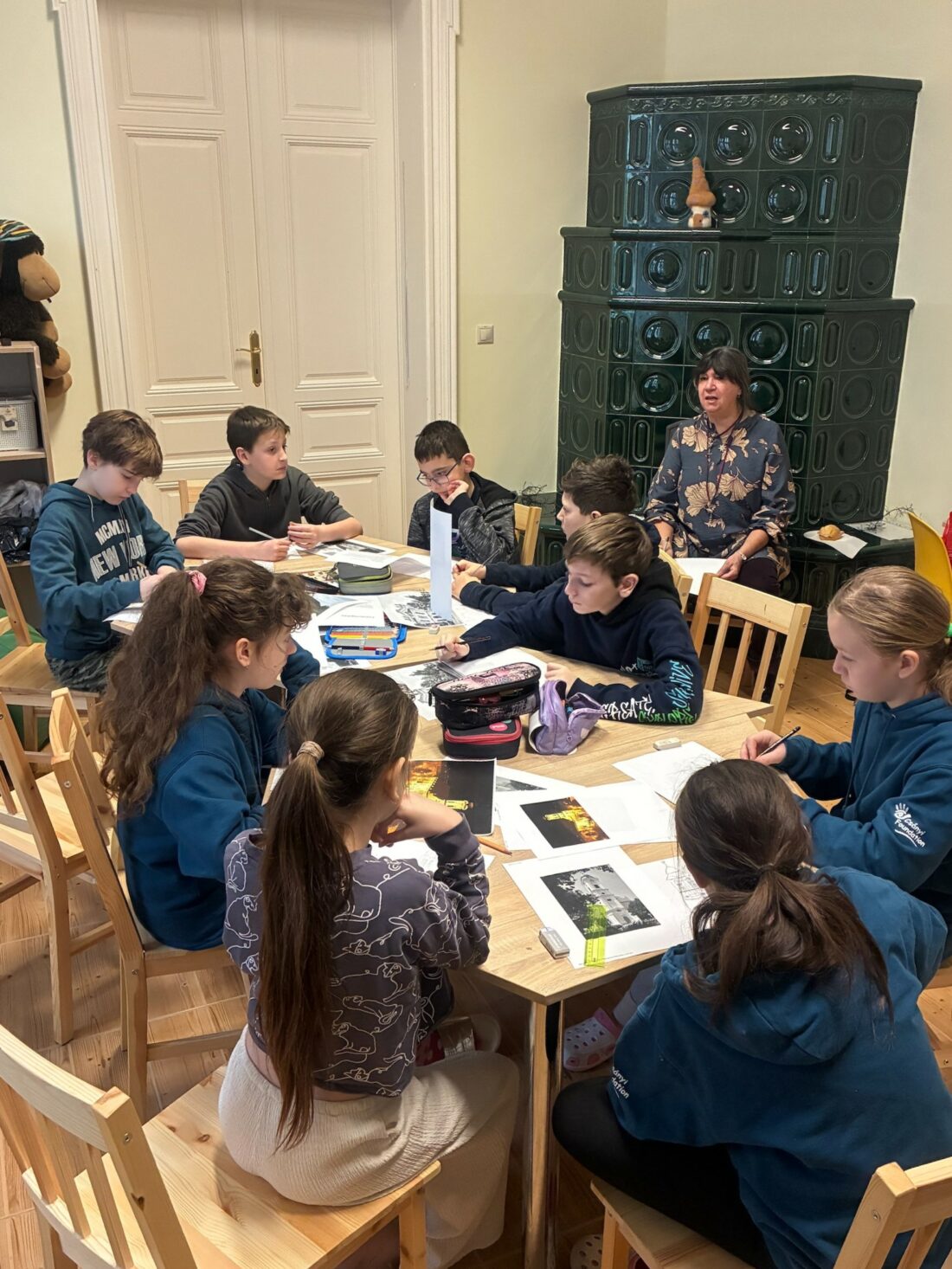
. “Within the framework of the Szentes project, the information necessary for the construction of a model of the notable buildings of Szentes, as well as the essential knowledge necessary for its implementation and execution, was collected. We started the project with a joint discussion with the students about their knowledge of Szentes, progressing to the naming of the notable buildings and their functions. We divided the group into 4 smaller units, with the selection of team leaders. The members of the units each chose a notable building in Szentes and drew it freehand based on photos, with a characteristic representation of its form and proportions. One student from each group collected information from internet portals, which they read out to their peers, who, based on feedback, confirmed their understanding of the information they had heard. Using a ruler, they made a flat, flat drawing of the buildings named, which served as the basis for a partial 3D model based on measurement, observation and editing, of the buildings named, which they cut out and folded into a three-dimensional form, thus displaying the buildings. Other members of the group drew and cut out trees and bushes to give a sense of the green areas and parks around the houses.
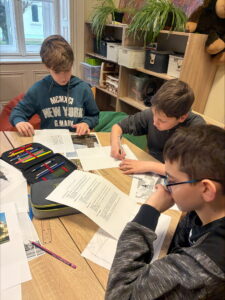
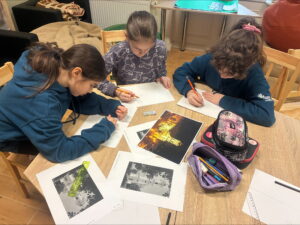
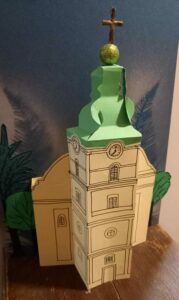
The models and facade parts of the buildings were applied to a cardboard base of a different color, placed together with the trees and bushes. According to the different technical abilities of the students, the implementation of the task encountered obstacles at many points, requiring strong guidance and a lot of re-planning. The design and implementation of the model will continue in the coming weeks, which the participants are eagerly awaiting. Saturday was characterized by a lot of interest and collection work, and the children spent the day in a good mood.” – Mária Beke, art teacher
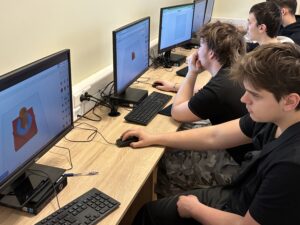
At the first full-day Maker’s Red Box session, drawing on last week’s “warm-up” and thought-provoking discussion and its problem-solving questions, we defined the areas that will be necessary for the functioning of the city of the future. We need to think about jobs, transportation, healthcare, education, energy supply in the same way as we do about recreational opportunities: sports, cultural opportunities, entertainment. The team members were each responsible for one of these areas and began to work out what role and location they would assign to these in our shared city. In the planning phase, they created a map model for this purpose, and then tried to optimally determine the placement of building complexes with interconnected functions.
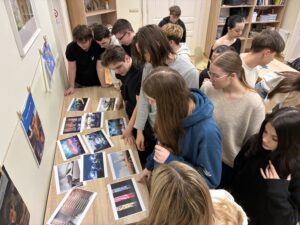
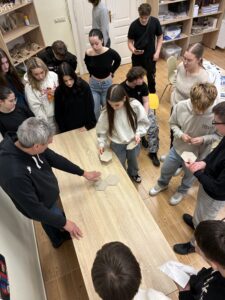
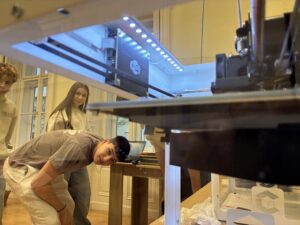
The practical knowledge for the implementation has also begun. They learned the design program for 3D building models, designed their first landmarks, and at the end of the day, they learned how to use a laser cutter and a 3D printer. In the future, they will have to place great emphasis on cooperation and effective communication between the individual areas of responsibility in parallel with the construction, so that in the end a model of a truly livable and harmoniously functioning settlement is realized. -László Lucza, development teacher, Sándor Kovács, mentor