

Celtic Coins in Hungary
The Municipality of the Town of Nagybajom is celebrating the 25th anniversary of its inauguration as a city in 2026. (Anniversaries of Hungarian numismatics in this year)
The last three years have presented a cluster of four interconnected anniversaries. Point 9 of the 12 Points of March 15, 1848, also expressed the demand: National Bank. The bank responsible for national banknote issuance, which also represents national independence and identity, was founded a hundred years ago in 1924, during the Bethlen consolidation of the Horthy era. The series of Hungarian gold coins was opened by the first Hungarian gold florin minted in 1325 by King Charles Robert of the House of Anjou; it was one of the most excellent circulation coins of the period, demonstrating the economic strength of the Kingdom of Hungary 700 years ago. On March 1, 1926, our first banknote bearing the name Pengő appeared, more than a hundred years ago. In that era, 5 pengős had to be given for 1 dollar—after Trianon! The name of our current national currency is again the Forint, which appeared in the form of paper money and coins in August 1946. It has been eighty years now.
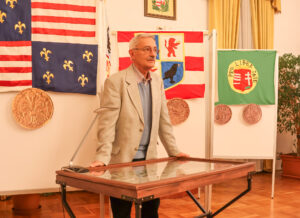
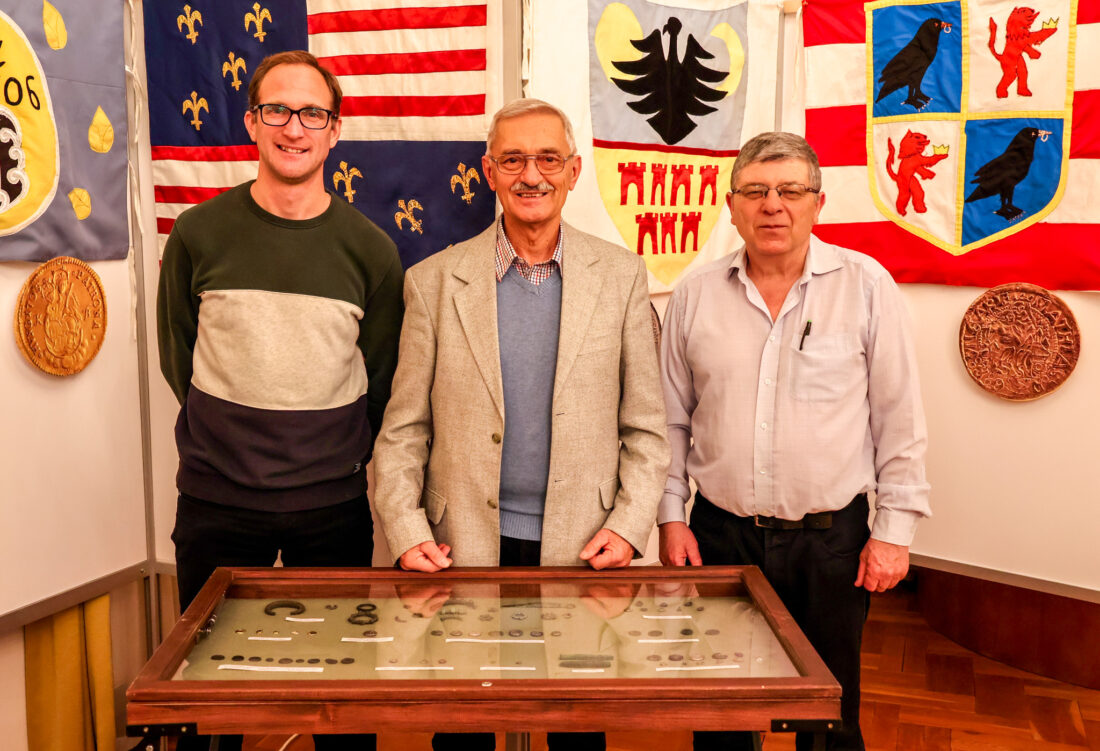
To strengthen the cooperation between the Nagybajom Community House of the Csányi Foundation and the Municipality of the Town of Nagybajom, and by weaving together the aforementioned anniversaries, we are organizing a series of lectures on monetary history. This monetary history block, as a joint innovation, is the first part of the jubilee. The venue for the scientific lecture series was the Assembly Hall of the Municipality of the Town of Nagybajom. On March 26, 2026, numismatist Péter Berzy gave a lecture on the occurrence of Celtic coins in Hungary. During the lecture, the large audience was enriched with interesting information that was unknown to many. Minting, early barter trade, counterfeiting, site excavations, and exciting finds made the understanding of what was heard even more informative.